Eine freie Initiative von Menschen bei  anthrowiki.at, anthrowiki.at,  anthro.world, anthro.world,  biodyn.wiki und biodyn.wiki und  steiner.wiki steiner.wikimit online Lesekreisen, Übungsgruppen, Vorträgen ... |
|
|
Use Google Translate for a raw translation of our pages into more than 100 languages. Please note that some mistranslations can occur due to machine translation. |







Best practice of biodynamic preparations - 1 lecture by Vincent Masson, 2026
A B C D E F G H I J K L M N O P Q R S T U V W X Y Z | 0-9
| English eposides 1 - 2 - 3 - 4 - 5 - 6 - 7 ... |
| Deutsche Folgen 1 - 2 - 3 - 4 - 5 - 6 - 7 ... |
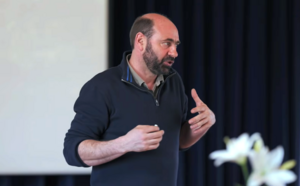
Transcription of the 1st lecture on 2nd march 2026
Welcome and Organizational Matters 00:00:18
Martin von Mackensen
Bonjour, good morning. I am very happy to be able to open this today. I don't want to say anything big. I just want to say it's nice that it worked out. We wanted to do this for a long time. It wasn't easy with the appointment. I am very happy that it worked out.
My name is Martin von Mackensen. I am responsible for everything related to the courses and education here. We have been working together for a long time. We are often with our students in Burgund (France). I am very happy that we can do this in a slightly different format here. I am also very happy that so many interested people have come from outside of Dottenfelderhof.
Vincent Masson
I have a little technical point - if the people close to me can swtich the mobile phones off, at least the 4G/5G. I already have to survive with this kind of technic (microphone). I don't like this kind of things. So it will make me less tired in the day - thank you.
Martin von Mackensen
And I will unfortunately not always be able to be there. Maybe the people from Dottenfelderhof farm can briefly show themselves — if you are outside, an organizational thing, if you want to know a way or something, that you can briefly see who knows their way around here. Can the people who are not from the Dottenfelderhof see this? Okay, especially there. Great, thank you. Now you can go.
Introduction: The Responsibility of Making the Preparations 00:05:12
Vincent Masson
Any problem with translation, please say it. Any need for translation. Bonjour. It's a great honor to be here, to talk here.
My work in France is about making the preparations. And making the preparations, it also means using them. And as you probably know, the biodynamic movement started a little bit more than 100 years ago. And during all this time, it has been a constant improvement. There was research from the beginning, from the second day of the agricultural course the research cycle was founded. And then it was just a way of learning more and more, and getting more and more precise. I am just a part of this story, as many other people.
So, there's many ways... I'll just read forrom the beginning. There are many ways to understand and explain the biodynamic preparations. And to start, as an introduction, I would like to offer a few insights in what they are, how we can understand them. There's many different ways to understand them. But also what it means to take the responsibility to make them. Then we will go in a bit later. We'll go in detail in all the practical aspects of making. I say all of them. Within three days, it's an overview, a good overview. We will see how much we managed to get in there.
And it's also important to say that speaking about making the preps, it's just speaking. We would need to do it. Which will not be the situation here. And I will show pictures. But pictures... it's not the same. It's a fixed idea. It's a fixed image. It's not living, as if we can act together. So, we will do what we can.
In our work about making the preparations — I say our work, because I joined my father in that. He was first a farmer. And then turned to consulting and to teaching. But it was always making preparations and more and more preparations. And I joined him in 2005. Making preparations goes with a lot of experimentation work. Very simple experiments to very complicated ones. So, it means very basic field experiments, garden experiments. But also work we run with universities, institutions and things like that.
And this is something that is also a part of the evolution of the biodynamic movement. It was all along with it. The advances of the last few decades have been very significant in the way to understand, to make and to use the preparations. They allow to have a better effectiveness of the preparations. They also question some of the directions that have been taken in the past. Studying history helps us to understand many things and to rediscover paths that were sometimes discarded, even though they were correct. So, we will have a little look at history, how things went here and there.
I'll try to bring you the knowledge we've developed. You will see that the names of Kolisko, Thun, Podolinski will be somewhere around. Because it's a path that they opened and we just follow. Walther Cloos, Rudolf Hauschlka also are important names for me. These people opened many doors to understanding the substances, the processes; there's a lot to do, to feed each other between pharmacists, doctors and agriculture.
Why Did Steiner Give the Agricultural Course? Vogeler's Letter 00:09:55
To start, I think it's good to come back to the beginning. The beginning is why Steiner gave this agricultural course. Maybe you know that there's two main reasons. I speak in my name, so the two main reasons, it means that's what I understand, what I keep from that.
One is what you can read in Emmanuel Vogeler's letter. Vogeler wrote a letter in January '24 to Steiner asking for the course. It was at this time, already two years, that people were asking Steiner to give this course for agriculture. Do you know this letter from Vogeler? Or should we read it? We read it. Okay. Do you have it there? Can you even read it in German? I think it's nice so far. How many of you are German native speakers? Non-German native speakers? Okay, so we read it in German. Can one of you read it? I just need to find it. I didn't plan that. You read it from here?
Sprecher 3: 00:17:26 ...so I dare to ask him for this kind of information, and if it is possible, to ask for access to the preservation of the agricultural course in a very polite way, in order to receive deep admiration and high regard.
Sprecher 1 (Vincent Masson): 00:17:46 I think it's a very good — thank you very much. I think it's a very good expression of what was the demand to Steiner.
The History of Plant Nutrition: Soluble Fertilizers 00:17:57
If we now look at another aspect of this, it is an evolution in agriculture, and there was a major change, more or less, in the century before the course, in the plant nutrition, in the type of fertilization that was used. And I would like to use it as a base, because we will see that Steiner really, quite precisely, answers this problem. If we don't understand the problem of plant nutrition, I think a good part of what we have in the agricultural course will just miss it. So this document, just to finish on it, you can find it in this book, if you're interested. Koberwitz, by Peter Selg.
OK, we can have a timeline. And we can say, so, plant fertilization in the years 1830s, in Central and Western Europe, we start importing soluble fertilizers from South America. And this is the guano that is taken from the coasts near Peru, and the saltpetre that is taken from the Atacama Desert in the north of Chile. Soluble fertilizers will start being used. There are also stuff made from bones, bones from the war that are burned. And basically, soluble fertilizers, you put them on the grass, and it grows faster, and it grows more green. It works. It doesn't mean it will work long. This is about soluble.
We will have another important term, is in the late '60s, with a German agronomist that is called Justus von Liebig. He shows, from a scientific point of view, that it is possible to feed the plants through soluble fertilizers. And that opens the door for industry to try to make soluble fertilizers. This will lead to synthetic fertilizers.
And synthetic fertilizers — Liebig has another important point. He's also the one that opens another door. And this door is, you can measure how much of this or this element your crops need to grow and to produce. So you can bring the quantity that is necessary to produce. And that brings the whole understanding of fertility into something you can measure, you can count. You make fertility based on mathematics. And this is completely taking it out of the living. Each time a plant grows, it feeds its environment. We create fertility through the growth of a plant. And we will come back to that very soon. But this is an important step, because till now, agriculture is based on this understanding of fertility and of input-output about fertilizers.
Synthetic Nitrogen: From War to Agriculture 00:22:06
Can you see anything here? At the end of the 19th century, industrials managed to make synthetic nitrogen, to synthesize nitrogen from the air, which is normally made by legumes, which you bring also when you bring organic matter. But you have one in Germany with the Haber-Bosch process. Two guys managed to synthesize nitrogen. And there's another way that is developed in Norway. Two ways to bring nitrogen in a needlelittle, things like that, that you can just bring on your side to make it simple.
It will be at the end of the First World War that synthetic nitrogen will be used for agriculture, as you know, each time. There's a lot of, many things are moved for war, in knowledge, in industry, in everything. There's many things going on at the moment in that. And we see that industry is taken in a movement for that. And then when the war is finished, we need to renew the use of those knowledge and those techniques. And that's what happened with nitrogen. Nitrogen was first made to make bombs, to make explosives. And when the end of the war was coming, then it was necessary to — how can we use it differently? We know that nitrogen is necessary for agriculture. So it works. And since 1918, it is possible to use synthetic nitrogen as a fertilizer.
And then the next date for us will be the agricultural course in '24. And we could think it is very short between the beginning of the use of synthetic nitrogen and the course. But it was already obvious that this synthetic nitrogen was creating problems, heavy problems, on soils, on plants, on quality of food, and so on. It was very, very fast. It's important to have that in mind. Many people think that agriculture became intensive, chemical, after the Second World War. And it's not true. It took a big acceleration. It went much faster. But everything was settled before. Everything was settled before.
And if you look for that in the course, you see that Steiner starts the course with a big, strong critic on this synthetic nitrogen. He says it will destroy — I don't have the words in mind, but it will destroy the life in the soil. It will bring degeneration of the cultivated plants. That food, based on that, will not be able to make healthy animals or humans. And in such a short time.
The Battle for Humus 00:25:46
Now we can have a look. You probably have, in different countries and different languages, people studying history that looked at the history of agriculture. In France, we have a few. And one of them — how many people read French? One of them, she's called Céline Pessis. And she studied a lot the beginning of the organic movement. But also, before the beginning of the organic movement — you know that the beginning of the organic movement, it is thea biodynamic movement. It is '24. That is the birth of what we can call the organic movement. And then it went in different ways.
But in this time, they started as well a fight for humus, a battle for humus. And this is in France very documented. Agronomists made associations to defend humus. To go to the politicians and say, we have a problem. We are now, in a very short time, in a way of very fast destroying humus in the soil. And that is in the '30s. In the '30s, we have this battle for humus in France. Maybe there's something similar in Germany. I don't know. I don't think so, because the problems at the moment regarding agronomy were not the same. But in France, we have some associations gathering agronomists to defend humus, and some associations gathering agronomists plus medical doctors. Because the medical doctors come in there to say, we cannot make healthy food. We cannot make healthy people if we fertilize the soils with these new ways.
So this is out of the biodynamic movement. This is something different. And it shows that what Steiner uses as one of the bases for his course is something that is shared in a much more wide movement.
How a Plant Feeds Itself: Water and Nutrition 00:28:09
So now we can have a look at what it means, soluble fertilization, synthetic fertilization for the plants and for the soil. Just a quick view on what it is on a practical way. Is it OK like that?
If we have a plant, how does it feed? How does it normally feed? We know that we have two things. On one side, the plant will need to take water in the soil. So we have water in the soil. And the water is taken in by the roots. And there's this water transpiration through the leaves. So the spring is working with the sun warmth. And here, this is the warmth that is in action.
On the other side, we have the proper nutrition of the plant. And that is, in a balanced situation, in a healthy situation, we would have nutrients in the soil that are not soluble, that are stored in humus pockets. And humus pockets, it's like a sponge. A sponge, you fill it with water. You put it here, and the water stays in the sponge. And humus has this capacity to keep nutrients inside. They don't run out. And they don't even run out if there's water going through. If the water is going, it doesn't take it. The plant has to take it in an active way.
And what we will have soon — it was still freezing this morning here, but I came yesterday from a few hours south, in South Burgundy. And we had, one week ago, last Tuesday, the grass started doing that, to the top. And turning from one day to the next, you see the little turn from something a little yellowish, a bit tired, to a tension and a green. And within two days, you start having the feeling that it does something like that. So at this moment, this is the time as well where the plant will build very fresh, very new little white roots. And those white roots will go in the humus pockets, take the nutrients.
This is two separate systems. The plant on one side will take water. And it cannot control it. The more it's warm, the more you have warmth, the more you will have this movement of water. And on the other side, for the nutrients, we need to have the warmth, and we need to have the light. And that will start the nutritional process of the plant.
We even know that the plant, in certain conditions, can choose very precisely not only what she will take in the soil, but who it will feed to produce what it needs. In the soil, we have the microorganisms, many. When I say microorganisms, it's to make something very complicated very simple. It means many, many, a whole world of bacteria, virus, fungi, very small, bigger organisms. I just put it all in the same name, in the same bag of microorganisms.
Two major works that youthey have to do in the soil. One is to transform anything that is organic. Any organic matter coming to the soil will be transformed, will feed this storage, this humus storage. And organic matter, it is, when you have a tree falling down, it's only organic matter. It might take decades before it feeds that. You first have the fungi that start making the work, and then they put it in a state where the bacteria can work. So you have an evolution like that. But each bacteria that dies also feeds this. So anything — well, you know, everything is in a cycle. And what dies feeds the living. And this, microorganisms have a very important role to play for that. Another part that is interesting for the plant nutrition is some microorganisms there will attack the rock, will attack the stones in our soils to release substances so that the plants can take them. That's important, even if it's only a very little part of the plant nutrition.
The Plant as a Densifier: Building Substance from the Cosmos 00:35:00
Do you have an idea of how much, when you see the trees that you have here or the grass here, it's the same — how much did it take from the soil to build itself? The big tree out here, how much of the substance that we have here in the aerial part and in the root system, how much was taken from the soil? It's less than 10%. It will be from 6% to 8% from the soil to build the plant. Not much. Not much.
So what is the plant doing? The plant, through photosynthesis, is taking carbon, oxygen, light, and making substance. A lot of sugar, not only sugars, but sugars a lot. The plant will also take hydrogen from the water. So we need nitrogen. And this is in the air. You know that the air around us here is about 79% of nitrogen. We just take what we need when we breathe in. But the plant needs it to go through the soil to take it. But it comes from the air. And it's not much. This nitrogen will be the average, is 3% of the plant. But it's necessary.
You know how a plant looks when there's not enough nitrogen. We know how a plant looks when there's not enough nitrogen. But many people don't know what a soil does or cannot do when there's too much nitrogen. Too much nitrogen blocks the activity of many, many microorganisms. The excess of nitrogen blocks the ability of the soil to build fertility. That's very interesting to know.
If we look at the agricultural situation in rich countries now around us, carbon will be 42% of the plant. Oxygen and hydrogen will be 45%. That's already a good part of what makes the plant. But the plant will also take from the air a little bit of calcium, a little bit of potassium, a little bit of different things that it needs. And only very little part of it comes from the soil. It means that the plant is able, through its digestive activity, its metabolic activity, which is mainly in the leaves, to build substance from non-substantial substances.
You don't see the carbon in the air. You don't see the nitrogen in the air. No one has ever seen it. We know it exists because we have a rational science that tells it to us. But no one was ever able to see that. But you know that in the course, when Steiner speaks of the substances, he says sometimes, oh, here the nitrogen is dead, and here it's alive. Anything that gets inside a skin belongs to the living, belongs to the organic. And it's alive. And each time we have a substance going out of us, it's out of the skin, and it's not alive anymore. It belongs to the laws of the minerality, to the laws of physics, and not to the laws of life. That's an interesting change.
So the plant is able to take from the air and to make substance. It's a densifier. It makes a body out of non-substantial things. I think it's a very important image, because it will also help us to understand what the preparations do. Did you ever understand clearly what it means when Steiner says about the valerian preparation, that it helps the phosphorus process? About the oak bark, that it helps the calc process? To me — and we'll come back to this — but to me, those preparations help the plant doing what it has to do, is building substances from this other part.
Earthly and Cosmic Substances; The Suprasensitive Forces 00:40:14
So now, our plant is densifying from there. We can also say it is densifying cosmic substances. If we take this image, that — whether earthly substance, what is it? Because the words are used in our dynamic movement, cosmic, earthly. Earthly is something I can touch. It has a weight. It has a physical reality. How much physical reality does the light have? How much physical reality does the warmth have? It has an effect on the physical. It is there. It exists. We can even say how fast the light is moving. Did you ever touch the light?
So to me, we can look at them like that. We have the earthly substances, that is, body, inner body, and the cosmic substances. It is also from the realm of the physical, but you cannot weigh it. You cannot touch it, but it's around. And this is different. This is one relation we have in the, we can say, material world.
And then we have another step that Steiner takes us to, which is the difference between the physical world, the one we relate to with our senses, to the suprasensitive world, to the non-physical world. And those are the forces. And the forces, he calls them, if we want to just name them quickly, he calls them the etheric forces, the astral forces, the I forces. And that is behind this physical reality. Behind, or at least — yeah, behind.
So now our plant is building substance. It's making what it needs for itself to grow, but it's also giving a lot to the soil. An average — soil is average, and it's always changing because it's based on scientific research. And scientific research has to change when a new guy comes and says, hey, we found something different. But we have this general idea that a plant will use approximately 20% to 45% of the total sugars it builds through photosynthesis are given to the soil as root exudates. 20% to 45%, it depends on the plants. Some are very generous to the soil, some less. But we will have here a lot of — it's mainly sugars, not only but mainly, a lot of sugars that are given to the soil as what we name root exudates.
So it means that what I see in the tree here is only a little bit of what this tree was able to build as substance in its life. Interesting.
Air, Water and Energy: The Conditions for Soil Life 00:43:41
And what do they do, those root exudates in the soil? I am a living being. I need — what do I need first? I can't stay without breathing more than a few seconds. I can't stay without drinking more than a few, maybe, days. And I can stay without food for much longer than that. And it's the same for the microorganisms in the soil. The first thing they need is air. We need aerobic conditions in the soil. That's why, when you want to work biodynamically, you first have to learn the agronomic basis. You first have to know how to do with the soil, to bring air, to bring air, to bring structure.
We have a positive evolution when we improve the structure of the soil. And the structure of the soil, it means that we give it the possibility to manage air. Because when you start with managing air in the soil, then water can be managed properly. And this means that the microorganisms can work properly. And that means they can improve the humus formation in the soil. So it all goes together.
We need air for the microorganisms. They need water, but not too much. What happens when — OK, I've understood it was not the same situation here. But in France, the last two months, it was just raining a lot. Raining a lot, not always big quantities, but it was permanent. And we had a situation where the soils did not take the water anymore. Like, you would go out, and wherever you go, you have this little bit of water on top. Like, the soils, saturation. Then the life in the soil cannot breathe. So we need to have soils that manage the water. Water should be drained when it's in excess, and should be kept so that when it becomes dry, you still have enough for the microorganisms to live, to take. So this is about air and about water.
And then we have our microorganisms can now breathe and can regulate their water needs. But they need energy. They need energy. And if you're low in energy, and you've got a big work to do now in an hour, you need some sugar. They get the energy from the root exudates. And this is the basic conditions so that they can work. If you have people working with you, you try to make good conditions for work. It's very cold outside. You get a big coat. You get a hat. Take a breakfast, and so on and so on. And we need our microorganisms to be able to work. And for that, the plant exudation is a major part of it.
That's why — how many people grow vegetables in the room here? Gardeners? Yeah? Yeah? Don't be shy. How many people grow wine? We need fruit trees. Any? We need to have, in the vegetables, we need to find moments in the season where we feed the soil. And that will come with the crop rotation, with very diversified green manures. In the perennial crops, we need to put in between the rows, we need to have those diversified crops to bring, to feed the soil. So that means we come back to this idea that the plant brings 20% to 40%, 20% to 45% — it changes with the scientific teams, but this gives an idea of the total sugars given to the soil. It means that the plant growing is building fertility around itself. A big part of what it does is feeding the soil.
So when Liebig says, now you can count, you can measure how much will be taken out by your crop, that means you can measure how much you need to bring in — this is not taken into consideration. And that's a big difference. Many people take a conventional farm, or even an organic farm, and they will look at the Demeter standards and see, oh, but you limit the nitrogen input. My crops cannot cope with that. It's too reduced compared to what I'm used to bringing. And you have to explain to those people, first get to a system that is working, and you will see that it is far enough. Because you bring a lot just through the plant activity.
Plants as the Only Creators of Substance 00:49:15
If we take it one step further, where does all the organic matter that we have on Earth come from? It is all from the plant. It's made through plant activity. There's less than 1% that comes from special bacterias in the seas. All the rest of the organic matter comes from plant activity. They are the only ones that are able to create new substance. The animals only transform. We only transform. And the difference is that we can easily destroy as well. That's a challenge. But that's a challenge that is also, for me, in the origins of the agricultural course. How can we contribute, as farmers, to a positive evolution of the fertility of the planet and so on? This is all in relation with the theme we will talk about later, preparations.
What else can we say? Yeah, probably you know this man, Edwin Scheller. He was German, he wrote a book that is called Ein Fragment. The whole name, I don't have it. Anyway, very interesting to understand the plant nutrition. And Scheller shows that this contribution from the plant to the development of the soil fertility is blocked when the soil is compact and when there is an excess of nitrogen. That's what he could show through his experiments. All our modern agriculture is based on an excess of nitrogen. You need that much for your crops, you bring a bit more in case it helps producing more. In fact, you limit the self-fertility development.
Sprecher 4: 00:51:49 Could you repeat that?
Sprecher 1 (Vincent Masson): 00:51:54 If there is too much nitrogen in the soil, then the soil — the plant chooses who it will feed in the soil. If they need a bit more of this substance, they will feed in priority the microorganisms that release this substance.
Sprecher 4: 00:52:37 If they need a bit more of this substance, they will feed in priority the microorganisms that release this substance.
Sprecher 1: 00:53:15 Mobilization of active nutrients by the plant.
Sprecher 5: 00:53:27 Mobilization of active nutrients by the plant. By the plant.
Sprecher 1: 00:53:39 And this is not possible when you have soil compaction or excess of nitrogen.
What Happens with Soluble Fertilizers 00:54:04
Now, this is the ideal situation. It works like that and you have a perfect farm. Shall we stay here? Let's have a look what's going on when we start using those soluble fertilizers. Soluble fertilizers, I told you, you bring it and it grows more. If you just look for a result, an immediate result is good. The problem is what happens along the time.
Soluble fertilizer — the fertilizer will go with the water in the soil. It means that when you have water running down, it also takes soluble fertilizers. That's why any soluble fertilization is polluting the water in the soil. Top water and deep water. But the plant, when it's warm and it's taking in water, this will be water plus nutrients. I cannot control my breathing. I need to breathe. If you go somewhere and there's too much sugar in the air, you take it in. If you stay there long, you take it in. Our plant will be, through soluble fertilizers, overfed and then become fragile because it takes too much in and it cannot cope with that properly. You will have bigger plants, but you will have weaker plants. Bigger, with thinner skins and too big for what can be processed properly.
A second step is synthetic. Synthetic fertilizers. Synthetic fertilizers are soluble, always. So now you bring soluble synthetic fertilizers, which mainly is nitrogen. And this nitrogen will come also with the water. So each time it's warm, it's taking more in. And here we have a problem. The plant is not even able to break down completely the substance. You know that our first gesture of digestion is to completely destroy what we take in. Whatever we take in becomes a kind of a milk. And at the end you don't find what it was. If you take a blood sample and try to find what I ate yesterday, it should not be possible. If it is, it means we have a big metabolic problem. And we have the same in the plant. But here, with the synthetic nitrogen, we have free nitrogen staying in the sap. And that creates big problems in the plant.
Francis Chaboussou and the Insect Problem 00:57:40
There is a man called Francis Chaboussou. He was a French scientist. And he started his scientific work in the 1930s to the 1970s in the INRA. INRA is the National Agronomic Research Institute, the very big one in France. And he showed — his first question was, some insects were known around the crops and they were not a problem before. And they became a problem. We are in this part of the story, in the 1930s. Why did these insects, which were not parasites, become parasites? And he studied what they need to eat and what they found in the crops. And he compared plants fertilized with compost, biodynamic compost.
At this time, it was normal. There was a guy called Pfeiffer in the biodynamic movement. And Pfeiffer was very... In a way, Pfeiffer made the biodynamic ideas easy to access for people who were not in the forces, stories, in the spiritual part of the world. You have this in the development of the biodynamic movement. Some people went very far in a special world, we can say. And some people tried to keep it very grounded so it would be open to the most people. And Pfeiffer was — one of his aims was that the biodynamic bases could be used by as many people on as much surface as possible in the world. And he is the one who wrote the first practical book about organic, which is called in English the Soil Fertility, I think. Fruchtbarkeit der Erde, in German. It was published in 1938. And it's an important date. Probably we'll speak later again about that, because 1938, it is the moment where the Versuchsring (experimental circle/Research cycle) of anthroposophical farmers decides that, yes, the experimentations show that biodynamic agriculture is something that is solid enough to be open for the world. Until 1938, it was a secret. You know about this story a bit? OK, we'll come back to that.
Anyway, Pfeiffer — what was I saying? Pfeiffer, yeah. Because of Pfeiffer, biodynamic methods were known in the agronomic French circles. In America as well. In different countries, he just made it something that was a normal way of looking. And I think he has a major responsibility in getting many people aware of the organic, what is organic in the soil, that we need to care for humus in the soil.
Anyway, because of that, Francis Chaboussou, in his experiments, compared compost without the preparations, compost with the preparations, soluble fertilizers, synthetic fertilizers. And he showed that the biodynamic compost with the preparations — the plants fertilized with that had less lack problems, less carencies. Carencies? Lacks? You understand that? Weaknesses? Or... Mangel. You know. They had less lacks, less Mangel. So they had a more complete feeding, or building of themselves. We come back to what we said about the preps very shortly, very quickly before.
Then he showed that with the soluble fertilizers, the plants were weaker, more fragile. And with the synthetic nitrogen, the plant was like calling insects and fungi. Because they found in it — so you have, here you put fungi and insects who come to the plant because they find what they need to eat. And in this free nitrogen that I drew here in red, you have something that they can come to eat. So, by changing the way fertility is brought to the soil, we transform the plant into something that is weak towards things from the environment. Interesting part about the aerial part.
It's interesting to know that Chaboussou showed that in a very clear and scientific way. He is absolutely not known in France. Chaboussou is more known in India, in America, in many places around the world and in England as well than in France, because he was then put aside because this knowledge did not fit with what was developing at the moment for agriculture.
What Happens in the Soil: Compaction 01:03:41
Now let's look at what's going on in the soil. How much do we need to be on time? Because we are in Germany, not in France. No, I mean, we are in Germany, we have to be on time. In France, it's because it's time to respect the cooks that we have to be on time. So we can do both at the same time.
In the soil, I bring soluble or maybe synthetic fertilizers to my soil. What do the plants do? There will be a change. The plant will develop root systems close to the surface. Do that with any animal. Change the place where you bring the food. It's very quick to understand. And we have the same here.
And you see, and this is very obvious for all the wine growers. It's very known in wine, but in fruit trees as well, that if you have a plot that comes from conventional farming, usually the roots are very close to the surface. Even if the soil is beautiful and welcoming, going much deeper. When you have roots developing here, it means that you have roots also dying here. Many of the deep root systems will just disappear. And this is the first reason for soil compaction. Soil compaction didn't wait for big tractors and big machinery. Soil compaction was already described by the people who were expecting this course from Steiner. It is something that was documented more than 100 years ago now.
So you have a soil getting compact. What about the microorganisms' activity? No more air. No more or not enough root exudates. No more energy. Less work. Less activity. What do we see with soil getting compact? It's getting more and more compact. It's getting more and more acid. The living conditions just reduce a lot. And this is very fast, very quick.
So, that is why I wanted to start with that. Because this evolution in the 1830s with the beginning of the use of soluble fertilizers, and then not even a century later with the use of synthetic nitrogen, completely changed the way the plants were or not healthy, the way the soils were able or not to be alive. And Steiner comes in 1924 and starts with this big critic about synthetic nitrogen, warning about the quality of the food, warning about the evolution of soil fertility, warning also about cultivated plant degeneration. And he says it will be very, very fast. So, that's in one way the beginning of our story. It's not only that, but it's a way that we can have in mind.
Reading the Course: Interactions and Building Health 01:07:24
Another interesting point: can we study separately the soil and the plant? Can we make a difference between a soil and a plant? What happens to a soil if you have no plant? It quite quickly becomes like a rock. And there's very, very few plants that are able to develop without a soil. And to me, this is interesting to understand. There are interactions everywhere.
And this is one key for reading the agricultural course. It's a course about interactions. From the beginning to the end, Steiner is showing us a world made of interactions. And he always says this is very important. We cannot separate. We cannot specialize. We cannot take bits away from the others. It's a funny thing to read the course with this idea in mind. Interactions. And to me, it's a course about interactions.
And at the same time, in our history, agricultural history, we separate everything. We specialize. We can feed the plant without feeding the soil. That is the story we just looked at. You can grow vegetables without having animals. What is the farm organism? Bring together what is necessary to have a healthy system. So to me, that's the two keys to read the course. It's interactions and building health. And it's a personal approach. But I like it. You can read the course with two guidelines. There are interactions and health to build. That's a personal understanding. But I think you can read the whole course again with this idea. And that's interesting.
If we look at the interactions in the course. First lecture. First lecture. If you don't have the context, the agricultural context of the time, you don't get the course. Look, it's not only in the first lecture. In lecture number four, when he starts talking about fertilizing. One of the first things he says is we don't want to feed what is watery in the soil. We want to make what is living in the soil more alive. This is a German text translated in French and then from French to English. Sorry. But you get the image. Basically, he says with complicated words — to me, maybe just complicated translation, I don't know — we don't want soluble fertilizers. And that's the beginning of when he starts speaking about compost and then bringing the preparations.
At the beginning of the first lecture, you have — and even before, in the introduction — you have a position taken towards what is developing in agriculture at this time. And then he says, now, when you have a plant growing there, let's say a beetroot. It is in interaction with what is very close. And you have the soil and you have the microclimate and you have the people around and you have whatever you want around. And it's also getting influences, interactions from things that are very far away. And then he will speak about the different planets.
And to me, it is not an invitation to work with the planets. It's not like — well, he doesn't say, look at them all the time before you work your soil, before you sow something or whatever. He just says, this is a part of our world and your plant, when building itself, is in interaction with all that. It is getting influences from all that. So, we can play with that. We can choose moments. But it's just a reality. If we want it or if we don't want it, it's just a reality. A leaf, if you take a leaf of whatever plant you want, it is building itself and it is feeding this whole system with things coming from the periphery. And the periphery is not only very close to us. And this is a view on interactions.
So to me, the first lecture of the course is: you farmers, you want to work with the living, just realize that your world is very wide. And when you eat a salad, you eat things also coming from very far away.
The Farm Organism and the Components of Substance 01:14:03
And then you go to the second lecture. Interactions. The farm organism. How can we build the farm as a healthy farm? We need to understand it as an organism. And let's come back to the few words I said before about substances. Substances in the skin, inside the skin, are alive. Outside of the skin are not alive. You want to build the farm as an organism. It means we speak of something alive. Then we can also take the story to the next step of the individuality, but already farm organism — it means we should create the necessary interactions in the farm so that it can develop in a healthy way. Fertility being an important part of the health.
And an interesting point on the farm organism is, you have how you build the farm. I don't take the Dottenfelderhof as an example because it's too complicated. There's too many organs. But which plants, which animals, how will you build something that can be a base for health? And then the next part is how you will carry that along the time with the seed selection for the plants, with the animal selection for the animals. So you will improve the relation to the place with the time. You will improve the answer to your expectation. What is the project on the farm? So you have what you do and how you carry it in the future. But this is all again something we can relate to interaction. Sorry, I just take a few images like that. We don't have time to study the course.
Lecture 3. What do we visit in the lecture 3? The components. What makes — what is the base of the substance? Especially the protein but not only. So we will take a look at the carbon, oxygen, nitrogen, and so on. And each time he is giving an image, a presentation of them as living beings. They have a social life together. He speaks about the interactions in the very small, in what is shaping the substance.
So for me, lecture 1, 2, 3, we build the context of where we work and it is all made of interactions. And then we start working in the lecture 4. It's not true, because we start working much earlier already. But lecture 4 now, how do we work with fertility? And we have this position very clear about the soluble fertilizers that we don't want. And we bring all the organic matter through the composting process. And we bring the preparations that will just bring further all the processes.
How the Preparations Accompany the Plant's Processes 01:17:15
Look, for example, what do we do with the 500 preparation? The 500 preparation, one of the first effects we can observe is the development of vertical, dense, and deep root systems. This is what was described in the lecture 4. This is what was shown by Kolisko. This is what was shown by many people and still what we can observe on the farms.
What does the 501 preparation do? 501 preparation makes the plant stronger, helps everything that makes the plant — the cells, the skins, the whole plant — stronger, more healthy. What is concentrating in the fruits? Better. Better because the concentrations are more harmonious. We will discuss that later again.
We accompany the processes of the plant. It's like we don't create things, but we help. We push it in a direction where it's more, where it's better.
It's time to go for lunch. Bon appétit.
Links
- BioDynamie Services
- https://www.soin-de-la-terre.org/categorie/autres-thematiques/vincent-masson/
- Source concernant l' anthroposophie anthrowiki.at
| English eposides 1 - 2 - 3 - 4 - 5 - 6 - 7 ... |
| Deutsche Folgen 1 - 2 - 3 - 4 - 5 - 6 - 7 ... |


